
By using this site, you agree to the Privacy Policy and Terms of Use.
Accept
MOTPOST

Smart News for the Social Generation.

  • Home
  • Nigeria
    • Economy & Business
    • Nigeria -focused Opinion
    • Policy & Governance
    • Society & Data
  • Markets
    • Banking & Finance
    • Capital Markets
    • Energy & Commodities
    • Market Data / Charts
    • Trade & Investment
  • World
    • Africa
    • Geopolitics
    • Global Economy
    • International Markets
  • Explainers
    • Data & Statistics Stories
    • Policy Explainers
    • Research Summaries
    • Visual / Video Explainers
  • Culture
    • Entertainment Economy
    • People & Public Life
    • Pop Culture & Influence
    • Social Pulse
Reading: Why Iran Keeps Hitting the UAE More Than Any Other Gulf Country
Share
MOTPOSTMOTPOST
Font ResizerAa
Search
  • Home
  • Nigeria
    • Economy & Business
    • Nigeria -focused Opinion
    • Policy & Governance
    • Society & Data
  • Markets
    • Banking & Finance
    • Capital Markets
    • Energy & Commodities
    • Market Data / Charts
    • Trade & Investment
  • World
    • Africa
    • Geopolitics
    • Global Economy
    • International Markets
  • Explainers
    • Data & Statistics Stories
    • Policy Explainers
    • Research Summaries
    • Visual / Video Explainers
  • Culture
    • Entertainment Economy
    • People & Public Life
    • Pop Culture & Influence
    • Social Pulse
Follow US
  • Home
  • About Us
  • Contact
  • InterestsNew
  • My Bookmark
© 2026 MOTPOST. All Rights Reserved
MOTPOST > World > Geopolitics > Why Iran Keeps Hitting the UAE More Than Any Other Gulf Country
GeopoliticsWorld

Why Iran Keeps Hitting the UAE More Than Any Other Gulf Country

Oladipupo Tijani
Last updated: March 18, 2026 11:20 am
Oladipupo Tijani
Published: March 18, 2026
Share
SHARE

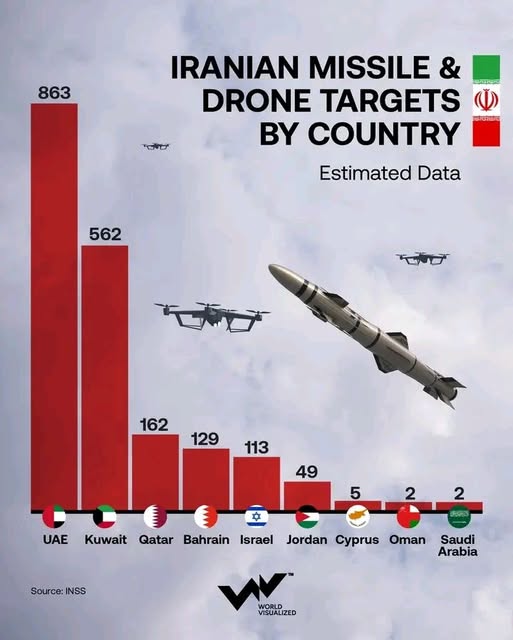
If several countries in the Middle East are linked to the U.S., why does Iran keep hitting the UAE the most?

It comes down to impact, access, and visibility.

First is impact. The UAE is not just another Gulf state. Cities like Dubai and Abu Dhabi sit at the center of global trade, aviation, and finance. When something happens there, the effect travels fast across markets, flights, and business flows. Striking the UAE sends a louder message to the world than hitting less connected locations.

Second is proximity. The UAE is one of the closest countries to Iran across the Gulf. That makes it easier to reach with drones and missiles compared to targets deeper in the region. Shorter distance means quicker strikes and fewer complications.

Third is strategic signalling. The UAE maintains strong security ties with the United States and has also built visible regional partnerships, including with Israel. From Iran’s perspective, that places the UAE in a category of countries seen as aligned, even if it is not directly fighting.

Then there is a calculation of risk. Targeting the UAE creates global attention, but still avoids the immediate escalation that could come from striking larger or more heavily militarised countries in the region. It is pressure without crossing certain lines too quickly.

There is also an economic angle. The UAE has long been a major trade gateway for Iran itself. Disrupting it raises the stakes, not just for rivals, but for the wider economic system tied to the Gulf.

Put simply, Iran is not choosing the UAE at random.

It is choosing the place where one strike is seen everywhere, felt economically, and sends the clearest signal without triggering instant full-scale escalation.

What Can Global Leaders Learn From the Years-Long Surveillance That Tracked Khamenei?
No More Pause. Iran Moves to Continuous Attacks
Fuel Shock. Countries Where Petrol Prices Are Surging As Iran War Escalates
BREAKING: Dubai in Crisis
What’s the Real Difference Between Iranian Oil and Venezuelan Oil and Why the World Still Buys Iran’s
Share This Article
Facebook Email Print
Leave a Comment

Leave a Reply Cancel reply

Your email address will not be published. Required fields are marked *

Follow US

Find US on Social Medias
FacebookLike
XFollow
InstagramFollow
TiktokFollow

Weekly Newsletter

Subscribe to our newsletter to get our newest articles instantly!
Popular News
Pop Culture & Influence

The Hidden Cost of Ghost Job Postings: A Strategic Risk to Employer Brand

Oladipupo Tijani
Oladipupo Tijani
April 15, 2026
Is Shoprite Really Leaving Nigeria? Here’s the Real Story Behind the Rumours
When Banks Depend on Foreign Cloud Tech, Risk Isn’t Just a Word. Here’s Why Nigerians Should Care.
Iran-U.S. Conflict: UAE death toll at 8, injuries at 157 since February 28
Wealth Migration: Where Money Goes When It Leaves Home – Lessons from former Access Bank Co-founder
- Advertisement -
Ad imageAd image
MOTPOST

MOTPOST delivers clear, data-driven journalism on Nigeria, markets, and world affairs for informed decisions daily.

Facebook X-twitter Tiktok Linkedin Instagram
Quick Link
  • Home
  • About Us
  • Contact
  • InterestsNew
  • My Bookmark
Top Categories
  • Culture
  • Explainers
  • Markets
  • Nigeria
  • World

Subscribe to Us

Subscribe to our email newsletter for latest news & updates.

© 2026 MOTPOST. All Rights Reserved.

  • Privacy Policy
  • Terms and Conditions
Motpost
Welcome Back!

Sign in to your account

Username or Email Address
Password

Lost your password?

