
By using this site, you agree to the Privacy Policy and Terms of Use.
Accept
MOTPOST

Smart News for the Social Generation.

  • Home
  • Nigeria
    • Economy & Business
    • Nigeria -focused Opinion
    • Policy & Governance
    • Society & Data
  • Markets
    • Banking & Finance
    • Capital Markets
    • Energy & Commodities
    • Market Data / Charts
    • Trade & Investment
  • World
    • Africa
    • Geopolitics
    • Global Economy
    • International Markets
  • Explainers
    • Data & Statistics Stories
    • Policy Explainers
    • Research Summaries
    • Visual / Video Explainers
  • Culture
    • Entertainment Economy
    • People & Public Life
    • Pop Culture & Influence
    • Social Pulse
Reading: Are Gulf States Running Out of Interceptors? What It Means for Regional Security
Share
MOTPOSTMOTPOST
Font ResizerAa
Search
  • Home
  • Nigeria
    • Economy & Business
    • Nigeria -focused Opinion
    • Policy & Governance
    • Society & Data
  • Markets
    • Banking & Finance
    • Capital Markets
    • Energy & Commodities
    • Market Data / Charts
    • Trade & Investment
  • World
    • Africa
    • Geopolitics
    • Global Economy
    • International Markets
  • Explainers
    • Data & Statistics Stories
    • Policy Explainers
    • Research Summaries
    • Visual / Video Explainers
  • Culture
    • Entertainment Economy
    • People & Public Life
    • Pop Culture & Influence
    • Social Pulse
Follow US
  • Home
  • About Us
  • Contact
  • InterestsNew
  • My Bookmark
© 2026 MOTPOST. All Rights Reserved
MOTPOST > World > Geopolitics > Are Gulf States Running Out of Interceptors? What It Means for Regional Security
GeopoliticsWorld

Are Gulf States Running Out of Interceptors? What It Means for Regional Security

Oladipupo Tijani
Last updated: March 14, 2026 2:24 pm
Oladipupo Tijani
Published: March 14, 2026
Share
SHARE

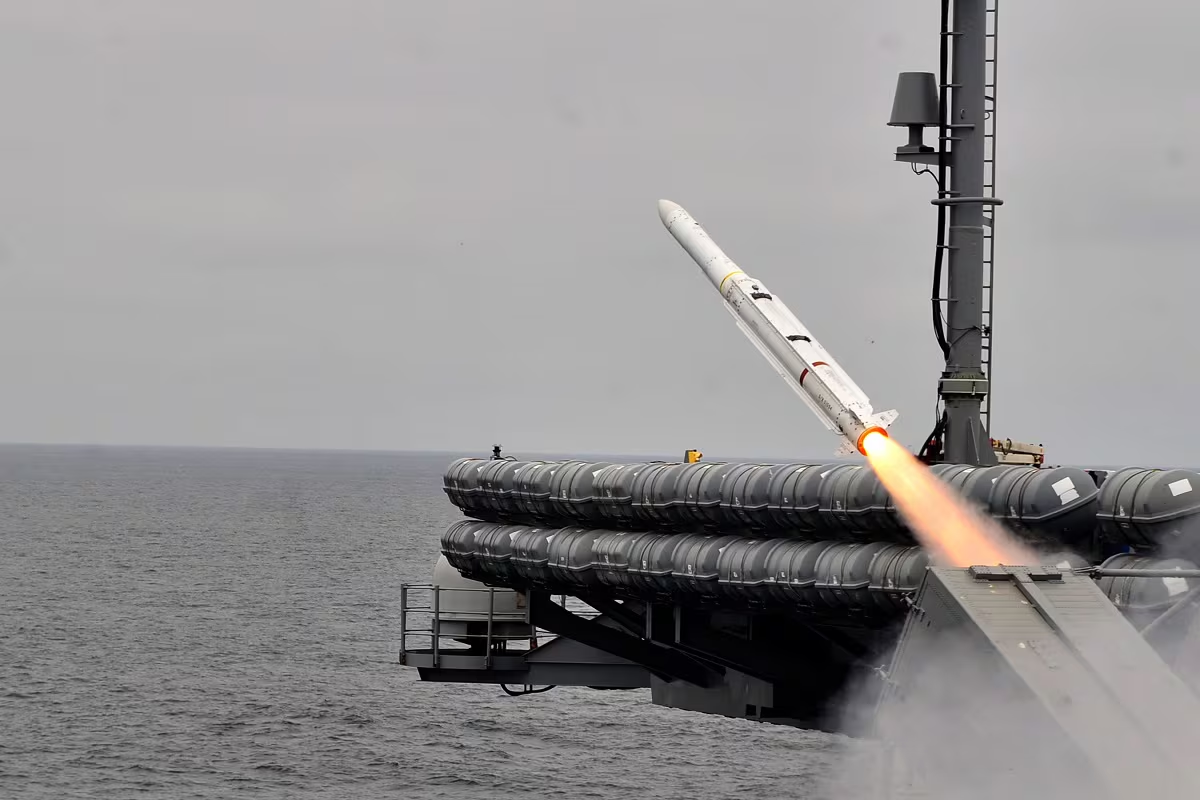
Reports from military analysts and defense sources say several Gulf countries are rapidly using up their missile and drone interceptors as regional tensions rise, especially amid the ongoing conflict involving Iran, United Arab Emirates, Saudi Arabia, and other states in the Middle East.

Interceptors are specialized missiles or weapons systems used to shoot down incoming threats such as ballistic missiles, cruise missiles, and drones. Examples include systems like the Patriot missile system, which many Gulf states rely on to defend critical infrastructure, oil facilities, and population centers.

Analysts note that because many of the threats today including drones and low‑flying missiles come in large swarms, defenders must fire large numbers of interceptors to stop them. Each interceptor can cost hundreds of thousands to millions of dollars, while many of the attacking drones are relatively cheap. This creates what defense experts call a cost‑exchange imbalance.

The result is that countries facing sustained attacks are “burning through” their interceptor stockpiles faster than they can replace them. Replenishing these systems takes time, complex supply chains, and significant financial resources.

Why this matters:

  1. Defense gaps could emerge: If interceptor supplies dwindle faster than they can be replaced, air defenses may become less effective against future threats.
  2. Budget strain: Buying advanced air defenses and interceptors is expensive, putting pressure on military budgets in a time of heightened tension.
  3. Strategic recalibration: States may seek alternative ways to counter threats, such as investing in lower‑cost counter‑drone systems, electronic warfare, or layered defense strategies that do not rely solely on expensive interceptors.

This dynamic also reflects a broader shift in modern warfare, where cheap offensive technologies like drones and missiles challenge traditional, expensive defensive systems, forcing nations to rethink how they protect their airspace.

Sources: Defense and military analysis on air defense interceptor usage in the Gulf region amid increased regional tensions, including commentary from international defense reporting and strategic studies.
Hands-On With the iPhone 13, Pro, Max, and Mini
U.S. Bases Don’t Protect Anyone, They Are a Threat.” Iran’s Ghalibaf Speaks Out
Some nations have never been to war in modern times.
Inside Iran’s Secret Drone Tunnels. Why the World Is Paying Attention
Top Trump Counterterrorism Official Joe Kent Resigns Over Iran. Could This Signal Deeper Cracks Inside the U.S.?
Share This Article
Facebook Email Print
Leave a Comment

Leave a Reply Cancel reply

Your email address will not be published. Required fields are marked *

Follow US

Find US on Social Medias
FacebookLike
XFollow
InstagramFollow
TiktokFollow

Weekly Newsletter

Subscribe to our newsletter to get our newest articles instantly!
Popular News
Global EconomyWorld

Follow the Money. Who Is Quietly Profiting From the U.S.–Iran Conflict?

Mariam Tijani
Mariam Tijani
March 13, 2026
Key Trends Developing in Global Equity Markets
Hands-On With the iPhone 13, Pro, Max, and Mini
Inside Iran’s Secret Drone Tunnels. Why the World Is Paying Attention
Telegram Fraud Is Rising Fast. Nigerian Bank Customers Should Pay Attention
- Advertisement -
Ad imageAd image
MOTPOST

MOTPOST delivers clear, data-driven journalism on Nigeria, markets, and world affairs for informed decisions daily.

Facebook X-twitter Tiktok Linkedin Instagram
Quick Link
  • Home
  • About Us
  • Contact
  • InterestsNew
  • My Bookmark
Top Categories
  • Culture
  • Explainers
  • Markets
  • Nigeria
  • World

Subscribe to Us

Subscribe to our email newsletter for latest news & updates.

© 2026 MOTPOST. All Rights Reserved.

  • Privacy Policy
  • Terms and Conditions
Motpost
Welcome Back!

Sign in to your account

Username or Email Address
Password

Lost your password?

