
By using this site, you agree to the Privacy Policy and Terms of Use.
Accept
MOTPOST

Smart News for the Social Generation.

  • Home
  • Nigeria
    • Economy & Business
    • Nigeria -focused Opinion
    • Policy & Governance
    • Society & Data
  • Markets
    • Banking & Finance
    • Capital Markets
    • Energy & Commodities
    • Market Data / Charts
    • Trade & Investment
  • World
    • Africa
    • Geopolitics
    • Global Economy
    • International Markets
  • Explainers
    • Data & Statistics Stories
    • Policy Explainers
    • Research Summaries
    • Visual / Video Explainers
  • Culture
    • Entertainment Economy
    • People & Public Life
    • Pop Culture & Influence
    • Social Pulse
Reading: Cheap Clothes, Heavy Cost. The Ugly Side of Secondhand Fashion Flooding Africa
Share
MOTPOSTMOTPOST
Font ResizerAa
Search
  • Home
  • Nigeria
    • Economy & Business
    • Nigeria -focused Opinion
    • Policy & Governance
    • Society & Data
  • Markets
    • Banking & Finance
    • Capital Markets
    • Energy & Commodities
    • Market Data / Charts
    • Trade & Investment
  • World
    • Africa
    • Geopolitics
    • Global Economy
    • International Markets
  • Explainers
    • Data & Statistics Stories
    • Policy Explainers
    • Research Summaries
    • Visual / Video Explainers
  • Culture
    • Entertainment Economy
    • People & Public Life
    • Pop Culture & Influence
    • Social Pulse
Follow US
  • Home
  • About Us
  • Contact
  • InterestsNew
  • My Bookmark
© 2026 MOTPOST. All Rights Reserved
MOTPOST > World > Africa > Cheap Clothes, Heavy Cost. The Ugly Side of Secondhand Fashion Flooding Africa
AfricaPeople & Public Life

Cheap Clothes, Heavy Cost. The Ugly Side of Secondhand Fashion Flooding Africa

Oladipupo Tijani
Last updated: March 17, 2026 2:38 pm
Oladipupo Tijani
Published: March 17, 2026
Share
SHARE

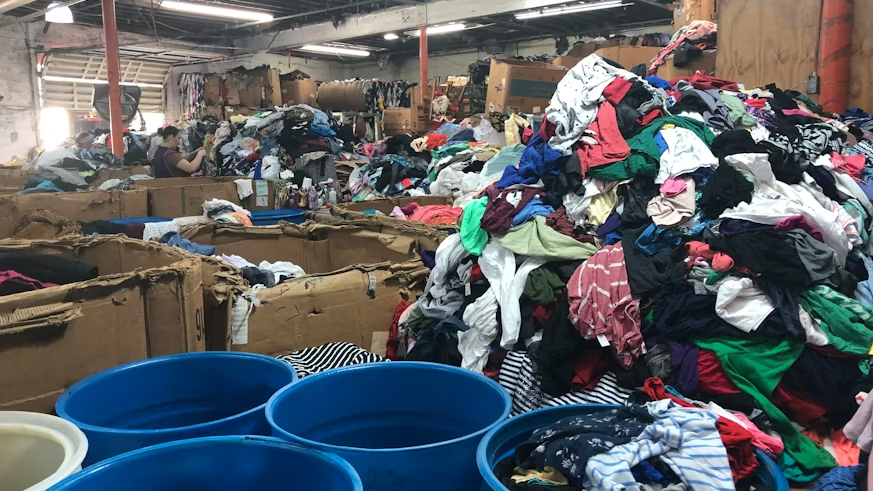
For many, dropping old clothes into a donation bin feels harmless. But a lot of what looks like charity ends up creating serious problems in Africa from environmental damage and wasted resources to hurting local industries.

Millions of items of secondhand clothing from the U.S., U.K., Europe and China are shipped to countries like Ghana, Kenya, Cameroon and Tanzania. Some traders earn money sorting and selling these garments, and cheap clothing helps families with low incomes. But the volume is overwhelming: Ghana alone can receive 15 million garments a week, and around 40 per cent of those end up as waste because they’re torn, stained or unsellable. Much of this ends up in landfills, drains and waterways, damaging ecosystems and public health in cities like Accra.

That flood of cheap used clothes also undercuts local textile industries that struggle to compete on price. In Cameroon, for example, local fabric production has collapsed to less than 5 per cent of the market as used clothing dominates. In some countries, this has led to job losses, idle factories and stalled efforts to build domestic fashion sectors.

Governments have tried different approaches. Tanzania raised duties and temporarily banned certain imports to protect local industry, though trade rules tied to deals like the African Growth and Opportunity Act have complicated those efforts.

Experts now call this a global imbalance. Wealthy nations offload their excess clothing while poorer countries bear the environmental clean‑up costs and see their own garment industries decline. The clothes we donate or discard can look cheap at home but wind up as waste and economic strain overseas.
No Petrol Price Cap. FG Says Global Oil Market Will Decide What Nigerians Pay
Africa Says “We’re Rated Unfairly”. Why Global Credit Scores Matter to Nigerian Wallets
Taking Painkillers Daily? Your Kidneys Could Be Quietly Failing
Iran-U.S. War. Why Trump Talks Constantly to the Media: A Psychological Explanation
Outrage Over a Controversial Vaccine Study in Africa. Why Nigerians Are Watching Closely
Share This Article
Facebook Email Print
Leave a Comment

Leave a Reply Cancel reply

Your email address will not be published. Required fields are marked *

Follow US

Find US on Social Medias
FacebookLike
XFollow
InstagramFollow
TiktokFollow

Weekly Newsletter

Subscribe to our newsletter to get our newest articles instantly!
Popular News
Uncategorized

Why Iraq Halted Oil Port Operations After Deadly Tanker Strikes

Mariam Tijani
Mariam Tijani
March 12, 2026
When the Lights Go Out, Diesel Becomes King: How Poor Power Makes Fuel Even Pricier in Nigeria
Taking Painkillers Daily? Your Kidneys Could Be Quietly Failing
Self-Driving Cars: Everything You Need to Know
We won’t let a single litre of oil through the Strait of Hormuz.
- Advertisement -
Ad imageAd image
MOTPOST

MOTPOST delivers clear, data-driven journalism on Nigeria, markets, and world affairs for informed decisions daily.

Facebook X-twitter Tiktok Linkedin Instagram
Quick Link
  • Home
  • About Us
  • Contact
  • InterestsNew
  • My Bookmark
Top Categories
  • Culture
  • Explainers
  • Markets
  • Nigeria
  • World

Subscribe to Us

Subscribe to our email newsletter for latest news & updates.

© 2026 MOTPOST. All Rights Reserved.

  • Privacy Policy
  • Terms and Conditions
Motpost
Welcome Back!

Sign in to your account

Username or Email Address
Password

Lost your password?

