
When tensions rise between the United States and Iran, the biggest winners are often not the countries fighting. Analysts point to several industries and nations that gain economically or strategically when instability spreads across the Middle East.
- Russia
Energy analysts say Russia often benefits when Middle East tensions disrupt oil markets. Higher global oil prices can significantly increase revenue for major exporters like Russia. At the same time, global political attention can shift away from the war in Ukraine.
Source: energy market analysis and geopolitical reporting from Reuters and Bloomberg. - Global Oil Exporters
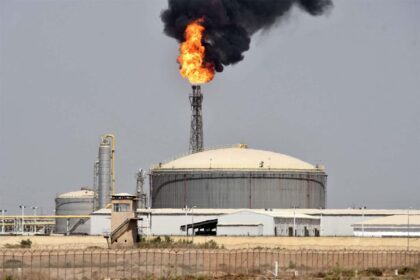
Instability near the Persian Gulf tends to push oil prices higher. About 20% of the world’s oil supply passes through the Strait of Hormuz, according to the U.S. Energy Information Administration.
Any threat to this route can trigger price spikes that benefit exporters such as Norway, Canada, and U.S. shale producers. - Defense and Weapons Manufacturers
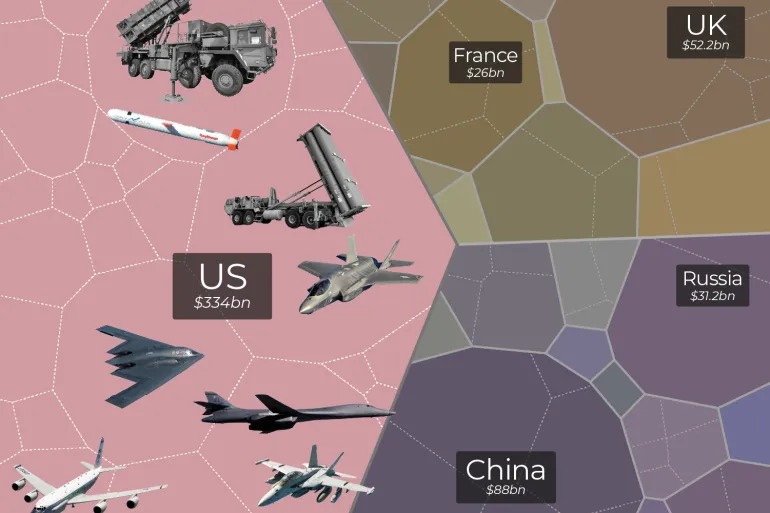
Wars typically drive military spending. Major contractors like Lockheed Martin, RTX Corporation (formerly Raytheon Technologies), and Northrop Grumman often see rising demand for missiles, air-defense systems, drones, and surveillance technologies during geopolitical crises. - Israeli Defense Companies
Conflict in the region also increases demand for technologies produced by Israeli firms such as Elbit Systems, Israel Aerospace Industries, and Rafael Advanced Defense Systems.
Systems like the Iron Dome missile defense platform receive global attention during active conflicts, which analysts say can boost export demand.
Source: export data from the Israel Ministry of Defense and arms trade research by the Stockholm International Peace Research Institute. - Energy and Industrial Companies
Some companies in the United States benefit when Middle East production is disrupted. Higher global prices and tighter supply can increase profit margins for oil, gas, and petrochemical producers. - Financial Traders
Wars create market volatility. Commodity traders, hedge funds, and shipping insurers often profit from large price swings in oil, gas, and energy derivatives during geopolitical crises. - Regional Rivals of Iran
Countries competing with Iran for influence, including Israel and Saudi Arabia, may gain strategically if Iran’s regional influence weakens, though analysts note the risks of wider escalation remain high.
Editorial Note
History shows major geopolitical conflicts often produce economic winners far from the battlefield, particularly in energy markets, defense industries, and financial trading. Yet the largest costs usually fall on civilians, regional economies, and long-term global stability.
Sources: U.S. Energy Information Administration data on Hormuz oil flows; defense export figures from the Israel Ministry of Defense; arms-industry analysis from the Stockholm International Peace Research Institute; market and geopolitical reporting from Reuters and Bloomberg.